Where Facts And Controversy In The News Come Together In Truth

Monday, May 21, 2012

Professor Supports ‘Lying About The Past’ To Prove A Point

Experiment Helps Reveal Shifting Nature Of The Truth On The Internet

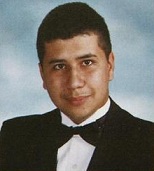
A technology story that appeared in the May 23, 2012 “the Atlantic” describes the carefully fabricated tales created by George Mason University undergraduates at the request of their professor, T. Mills Kelley. (pictured to the left) The course, 'Lying About The Past' has upset many, but the experiment helps reveal the shifting nature of the truth on the Internet.  

As The Stories Go

A woman opens an old steamer trunk and discovers tantalizing clues that a long-dead relative may actually have been a serial killer, stalking the streets of New York in the closing years of the nineteenth century. A beer enthusiast is presented by his neighbor with the original recipe for Brown's Ale, salvaged decades before from the wreckage of the old brewery--the very building where the Star-Spangled Banner was sewn in 1813. A student buys a sandwich called the Last American Pirate and unearths the long-forgotten tale of Edward Owens, who terrorized the Chesapeake Bay in the 1870s.

These stories have two things in common. They are all tailor-made for viral success on the Internet, and they are all lies. Their escapades not only went unpunished, they were actually encouraged by their professor.

Four years ago, students created a Wikipedia page detailing the exploits of Edward Owens, successfully fooling Wikipedia's community of editors. This year, though, one group of students made the mistake of launching their hoax on Reddit. What they learned in the process provides a valuable lesson for anyone who turns to the Internet for information.

The first time Professor Kelly taught the course, in 2008, his students counterfeited the life of Edward Owens, mixing together actual lives and events with brazen fabrications. They created YouTube videos, interviewed experts, scanned and transcribed primary documents, and built a Wikipedia page to honor Owens' memory. The romantic tale of a pirate plying his trade in the Chesapeake struck a chord, and quickly landed on USA Today's pop culture blog.

When Kelly announced the hoax at the end of the semester, some were amused, applauding his pedagogical innovations. Many others were livid. Critics decried the creation of a fake Wikipedia page as digital vandalism. "Things like that really, really, really annoy me," fumed founder Jimmy Wales, comparing it to dumping trash in the streets to test the willingness of a community to keep it clean. But the indignation may, in part, have been compounded by the weaknesses the project exposed. Wikipedia operates on a presumption of good will.

Determined contributors, from public relations firms to activists to pranksters often exploit that, inserting information they would like displayed. The sprawling scale of Wikipedia, with nearly four million English-language entries, ensures that even if overall quality remains high, many such efforts will prove successful. Last January, as he prepared to offer the class again, Kelly put the Internet on notice. He posted his syllabus and announced that his new, larger class was likely to create two separate hoaxes. He told members of the public to "consider yourself warned--twice."

This time, the class decided not to create false Wikipedia entries. Instead, it used a slightly more insidious stratagem, creating or expanding Wikipedia articles on a strictly factual basis, and then using their own websites to stitch together these truthful claims into elaborate hoaxes. One group took its inspiration from the fact that the original Star-Spangled Banner had been sewn on the floor of Brown's Brewery in Baltimore. The group decided that a story that good deserved a beer of its own. They crafted a tale of discovering the old recipe used by Brown's to make its brews, registered BeerOf1812.com, built a Wikipedia page for the brewery, and tweeted out the tale on their Twitter feed.

No one suspected a thing. In fact, hardly anyone even noticed. They did manage to fool one well-meaning DJ in Washington, DC, but the hoax was otherwise a dud.

The second group settled on the story of serial killer Joe Scafe. Using newspaper databases, they identified four actual women murdered in New York City from 1895 to 1897, victims of broadly similar crimes. They created Wikipedia articles for the victims, carefully following the rules of the site. They concocted an elaborate story of discovery, and fabricated images of the trunk's contents. Then, the class prepared to spring its surprise on an unsuspecting world. A student posing as Lisa Quinn logged into Reddit, the popular social news website, and posed an eye-catching question: "Opinions please, Reddit. Do you think my 'Uncle' Joe was just weird or possibly a serial killer?"

The post quickly gained an audience. Redditors dug up the victims' Wikipedia articles, one that recorded contemporary newspaper speculation that the murderer was the same man who had gone on a killing spree through London. "The day reddit caught Jack the Ripper," a redditor exulted. "I want to see these cases busted wide open!" wrote another. "Yeah! Take that, Digg!" wrote a third. But it took just twenty-six minutes for a redditor to call foul, noting the Wikipedia entries' recent vintage.

Others were quick to pile on, deconstructing the entire tale. The faded newspaper pages looked artificially aged. The Wikipedia articles had been posted and edited by a small group of new users. Finding documents in an old steamer trunk sounded too convenient. And why had Lisa been savvy enough to ask Reddit, but not enough to Google the names and find the Wikipedia entries on her own? The hoax took months to plan but just minutes to fail.

Why did the hoaxes succeed in 2008 and not in 2012? If thousands of Internet users can be persuaded that Abraham Lincoln invented Facebook, surely the potential for viral hoaxes remains undiminished. One answer lies in the structure of the Internets various communities. Wikipedia has a weak community, but centralizes the exchange of information. It has a small number of extremely active editors, but participation is declining, and most users feel little ownership of the content. And although everyone views the same information, edits take place on a separate page, and discussions of reliability on another, insulating ordinary users from any doubts that might be expressed.

Facebook, where the Lincoln hoax took flight, has strong communities but decentralizes the exchange of information. Friends are quite likely to share content and to correct mistakes, but those corrections won't reach other users sharing or viewing the same content. Reddit, by contrast, builds its strong community around the centralized exchange of information. Discussion isn't a separate activity but the sine qua non of the site. When one user voiced doubts, others saw the comment and quickly piled on.

But another, the more compelling answer has to do with trust. Kelly's students, like all good con artists, built their stories out of small, compelling details to give them a veneer of veracity. Ultimately, though, they aimed to succeed less by assembling convincing stories than by exploiting the trust of their marks, inducing them to lower their guard. Most of us assess arguments, at least initially, by assessing those who make them. Kelly's students built blogs with strong first-person voices, and hit back hard at skeptics. Those inclined to doubt the stories were forced to doubt their authors. They inserted articles into Wikipedia, trading on the credibility of that site. And they aimed at very specific communities: the "beer lovers of Baltimore" and Reddit.

That was where things went awry. If the beer lovers of Baltimore form a cohesive community, the class failed to reach it. And although most communities treat their members with gentle regard, Reddit prides itself on winnowing the wheat from the chaff. It relies on the collective judgment of its members, who click on arrows next to contributions, elevating insightful or interesting content, and demoting less worthy contributions. Even Mills says he was impressed by the way in which redditors "marshaled their collective bits of expert knowledge to arrive at a conclusion that was largely correct." It's tough to con Reddit.

The loose thread, of course, was the Wikipedia articles. The redditors didn't initially clue in on their content, or identify any errors; they focused on their recent vintage. The whole thing started to look as if someone was trying too hard to garner attention. Kelly's class used the imaginary Lisa Quinn to put a believable face on their fabrications. When Quinn herself started to seem suspicious, it didn't take long for the whole con to unravel.

If there's a simple lesson in all of this, it's that hoaxes tend to thrive in communities that exhibit high levels of trust. But on the Internet, where identities are malleable and uncertain, we all might be well advised to err on the side of skepticism.

Sometimes even an apparent failure can mask an underlying success. The students may have failed to pull off a spectacular hoax, but they surely learned a tremendous amount in the process. "Why would I design a course," Kelly asks on his syllabus, "that is both a study of historical hoaxes and then has the specific aim of promoting a lie (or two) about the past?" Kelly explains that he hopes to mold his students into "much better consumers of historical information," and at the same time, "to lighten up a little" in contrast to "overly stuffy" approaches to the subject.

He defends his creative approach to teaching the mechanics of the historian's craft, and plans to convert the class from an experimental course into a regular offering. There's also an interesting coda to this convoluted tale. The group researching Brown's Brewery discovered that the placard in front of the Star-Spangled Banner at the National Museum of American History lists an anachronistic name for the building in which it was sewn. They have written to the museum to correct the mistake.

For those students, at least, falsifying the historical record may prove less rewarding than setting it straight.

End Of Story

Jack Swint-Publisher
West Virginia News
E-Mail:  WestVirginiaNews@gmail.com
Website: http://WVNewsOnline.com
Blog: http://WestVirginiaNews.blogspot.com
Twitter:  @WVNewsOnline
LinkedIn: Jack Swint
.
.
.
.
.

Thursday, May 17, 2012

Minority Birth Rate Surpasses Whites In US

Racial And Ethnic Minorities Surpass Whites In U.S. Births For First Time, Census Reports

According to the following story written by Hope Yen and John Raby with the Associated Press….For the first time, racial and ethnic minorities make up more than half the children born in the U.S., capping decades of heady immigration growth that is now slowing.

New 2011 census estimates highlight sweeping changes in the nation's racial makeup and the prolonged impact of a weak economy, which is now resulting in fewer Hispanics entering the U.S. "This is an important landmark," said Roderick Harrison, a former chief of racial statistics at the Census Bureau who is now a sociologist at Howard University. "This generation is growing up much more accustomed to diversity than its elders."

The report comes as the Supreme Court prepares to rule on the legality of Arizona's strict immigration law, with many states weighing similar get-tough measures. "We remain in a dangerous period where those appealing to anti-immigration elements are fueling a divisiveness and hostility that might take decades to overcome," Harrison said.

As a whole, the nation's minority population continues to rise, following a higher-than-expected Hispanic count in the 2010 census. Minorities increased 1.9 percent to 114.1 million, or 36.6 percent of the total U.S. population, lifted by prior waves of immigration that brought in young families and boosted the number of Hispanic women in their prime childbearing years.

But a recent slowdown in the growth of the Hispanic and Asian populations is shifting notions on when the tipping point in U.S. diversity will come — the time when non-Hispanic whites become a minority. After 2010 census results suggested a crossover as early as 2040, demographers now believe the pivotal moment may be pushed back several years when new projections are released in December. The annual growth rates for Hispanics and Asians fell sharply last year to just over 2 percent, roughly half the rates in 2000 and the lowest in more than a decade. The black growth rate stayed flat at 1 percent.

The immigrants staying put in the U.S. for now include Narcisa Marcelino, 34, a single mother who lives with her two daughters, ages 10 and 5, in Martinsburg, W.Va. After crossing into the U.S. from Mexico in 2000, she followed her brother to the eastern part of the state just outside the Baltimore-Washington region. The Martinsburg area is known for hiring hundreds of migrants annually to work in fruit orchards. Its Hispanic growth climbed from 14 percent to 18 percent between 2000 and 2005 before shrinking last year to 3.3 percent, still above the national average.

Marcelino says she sells food from her home to make ends meet for her family and continues to hope that one day she will get a hearing with immigration officials to stay legally in the U.S. She aspires to open a restaurant and is learning English at a community college so she can help other Spanish-language speakers. If she is eventually deported, "it wouldn't be that tragic," Marcelino said. "But because the children have been born here, this is their country. And there are more opportunities for them here."

Of the 30 large metropolitan areas showing the fastest Hispanic growth in the previous decade, all showed slower growth in 2011 than in the peak Hispanic growth years of 2005-2006, when the construction boom attracted new migrants to low-wage work. They include Lakeland, Fla.; Charlotte, N.C.; Atlanta; Provo, Utah; Las Vegas; and Phoenix. All but two — Fort Myers, Fla., and Dallas-Fort Worth — also grew more slowly last year than in 2010, hurt by the jobs slump.

Pointing to a longer-term decline in immigration, demographers believe the Hispanic population boom may have peaked. "The Latino population is very young, which means they will continue to have a lot of births relative to the general population," said Mark Mather, associate vice president of the Population Reference Bureau. "But we're seeing a slowdown that is likely the result of multiple factors: declining Latina birth rates combined with lower immigration levels. If both of these trends continue, they will lead to big changes down the road."

William H. Frey, a demographer at the Brookings Institution who analyzed the census data, noted that government debates over immigration enforcement may now be less pressing, given slowing growth. "The current congressional and Supreme Court interest in reducing immigration — and the concerns especially about low-skilled and undocumented Hispanic immigration — represent issues that could well be behind us," he said.

Minorities made up roughly 2.02 million, or 50.4 percent of U.S. births in the 12-month period ending July 2011. That compares with 37 percent in 1990. In all, 348 of the nation's 3,143 counties, or 1 in 9, have minority populations across all age groups that total more than 50 percent. In a sign of future U.S. race and ethnic change, the number of counties reaching the tipping point increases to more than 690, or nearly 1 in 4, when looking only at the under age 5 population.

The counties in transition include Maricopa (Phoenix), Ariz.; King (Seattle), Wash.; Travis (Austin), Texas; and Palm Beach, Fla., where recent Hispanic births are driving the increased diversity among children. Also high on the list are suburban counties such as Fairfax, Va., just outside the nation's capital, and Westchester, N.Y., near New York City, where more open spaces are a draw for young families who are increasingly minority.

According to the latest data, the percentage growth of Hispanics slowed from 4.2 percent in 2001 to 2.5 percent last year. Their population growth would have been even lower if it weren't for their relatively high fertility rates — seven births for every death. The median age of U.S. Hispanics is 27.6 years.

Births actually have been declining for both whites and minorities as many women postponed having children during the economic slump. But the drop since 2008 has been larger for whites, who have a median age of 42. The number of white births fell by 11.4 percent, compared with 3.2 percent for minorities, according to Kenneth Johnson, a sociologist at the University of New Hampshire.

Asian population increases also slowed, from 4.5 percent in 2001 to about 2.2 percent. Hispanics and Asians still are the two fastest-growing minority groups, making up about 16.7 percent and 4.8 percent of the U.S. population, respectively. Blacks, who comprise about 12.3 percent of the population, have increased at a rate of about 1 percent each year. Whites have increased very little in recent years.

Other Findings:

The migration of black Americans back to the South is slowing. New destinations in the South, including Atlanta, Charlotte, N.C., Raleigh, N.C., and Orlando, Fla., saw sharp drop-offs in black population growth as the prolonged housing bust kept African-Americans locked in place in traditional big cities. Metro areas including New York, Chicago, Los Angeles and San Francisco had reduced declines or gains.

Nine U.S. counties in five states saw their minority populations across all age groups surpass 50 percent last year. They were Sutter and Yolo in California; Quitman in Georgia; Cumberland in New Jersey; Colfax in New Mexico; and Lynn, Mitchell, Schleicher and Swisher in Texas. Maverick County, Texas, had the largest share of minorities at 96.8 percent, followed by Webb County, Texas, and Wade Hampton, Alaska, both at 96 percent.

Four states — Hawaii, California, New Mexico and Texas — as well as the District of Columbia have minority populations that exceed 50 percent. The census estimates used local records of births and deaths, tax records of people moving within the U.S., and census statistics on immigrants. The figures for "white" refer to those whites who are not of Hispanic ethnicity.

End Of Story…

Jack Swint-Publisher
West Virginia News
E-Mail:  WestVirginiaNews@gmail.com
Website: http://WVNewsOnline.com
Blog: http://WestVirginiaNews.blogspot.com
Twitter:  @WVNewsOnline
LinkedIn: Jack Swint

.

.

.

.

.

.

Wednesday, May 16, 2012

WV College Student Debt Is The Opposite Of National Trend

Analysis Shows State Run Schools Leave Graduates With Greater Levels Of Debt…Not True In The Mountain State

According to a new Reuters study, public state run colleges cause more student debt than private run 4 year schools. But, according to statistics for WV colleges, it’s the students who graduate from privately run schools that are the ones leaving with more in student debt.

Why the variance between WV and other states? One reason for this appears to be how other colleges across the nation are restructuring their financial aid policies and utilizing large endowments. Just how creative are they becoming with the high rate of student debt? Seventy-four schools nationwide, both public and private have eliminated loans from their financial aid packages for at least some students, according to FinAid.org.

For instance, Harvard, Stanford and Berkeley have capped contributions for students from low- and middle-income families. Starting next fall Harvard students with a family income of less than $65,000 will pay nothing to attend, and those with incomes under $150,000 will pay 10 percent of the total cost of tuition, room, board and fees - or less. Adam Falk, president of Williams College said that whenever its possible, provides students who qualify for financial aid with grants or scholarships rather than loans. "Our commitment is not to make education free, but to make it affordable,"

Where you attend college now can significantly impact how much you owe when you leave school. For example, obtaining an Ivy League degree often requires less borrowing than a degree from many much less expensive state schools. With more than $1 trillion in student loans outstanding in this country, crippling debt is no longer confined to dropouts from for-profit colleges or graduate students who owe on many years of education, some of the overextended debtors in years past.

Now, nearly everyone pursuing a bachelor’s degree is borrowing. As prices soar, a college degree statistically remains a good lifetime investment, but it often comes with an unprecedented financial burden. In fact, about two-thirds of bachelor’s degree recipients borrow money to attend college, either from the government or private lenders, according to a Department of Education survey of 2007-8 graduates; the total number of borrowers is most likely higher since the survey does not track borrowing from family members.

To demonstrate these differences, Reuters gathered research on the average student debt for the class of 2011 - the most recent data available, at 25 private and public universities and liberal arts colleges with top rankings from U.S. News and World Report's annual survey. (Linked below) These schools, among the most elite and expensive in the country, also have instituted in the last several years some of the most generous financial aid policies. On average, 53 percent of students at the surveyed schools received financial aid, and at least half of students at most of the institutions graduated debt-free.

In one example, University of Michigan graduates owed, on average, more than $27,000, compared with an average for Princeton University graduate of only $5,000. And the much higher debt levels at Michigan come even though costs there for in-state students are less than half the cost of attending Princeton - an estimated $25,204 for incoming freshman at Michigan for tuition, room and board, compared with $54,780 at Princeton.

Students at no-loan colleges still can, and often do, borrow money to help cover the portion of costs that the institutions determine should be borne by their families. At Pomona College, for instance, the average student debt is slightly more than $10,000 and 53 percent of students graduated with loans. The University of North Carolina, on the other hand, also had one of the lowest debt burdens, $15,472, with 65 percent of students graduating debt-free.

Financial support for West Virginia public colleges and universities comes directly from the state government, from tax dollars and other revenue the state collects in lieu of private endowments. West Virginia public colleges and universities may also receive funds from the federal government and private sources, but in many cases the state is the primary source of support of public colleges. According to stats, 73% of all 4-year graduates’ leave WV colleges owing an average of $23,678.

Eliminating loans isn't an option at most public universities. Substantial state funding cuts are forcing public schools to depend more heavily on tuition payments to cover operating costs. "We just don't have the fiscal means to eliminate debt," says Susan Fischer, financial aid director at the University of Wisconsin-Madison, where students graduated with an average debt of $24,140 in 2011. Two-thirds of all students in 2010 borrowed money to pay for college, for an average debt load of $25,000, according to the nonprofit Institute for College Access & Success.

According to the nonprofit College Board, one reason the average tuition and fees at private four-year colleges rose 28 percent in the last five years is that the increase was 41 percent for in-state tuition at public schools. California alone, which educates about 10 percent of all full-time U.S. college students, increased tuition and fees at state schools by 21 percent in 2011 at its four-year institutions and by 37 percent at two-year colleges.

Financial support for West Virginia public colleges and universities comes directly from the state government, from tax dollars and other revenue the state collects in lieu of private endowments. West Virginia public colleges and universities may also receive funds from the federal government and private sources, but in many cases the state is the primary source of support of public colleges.

With the weak job market, the prospects for paying back loans are challenging for recent grads. One statistic grabbing headlines is that total outstanding student loan debt in the U.S. now tops $1 trillion, exceeding even credit card debt. One yardstick for how much debt students can handle: Borrow no more over four years than what you'll earn the first year out of college. That can require rigorous budgeting and tough decisions, yet college administrators believe loans help make students feel more responsibility for their education.

Take away from the Reuters' survey, some debt is nearly unavoidable in higher education today. Despite the generosity of elite schools, today's student debt burden will undoubtedly impact graduates' and perhaps the nation's future opportunities. "We're talking about the generation who will hopefully steady our economy," says Ronald Johnson, financial aid director at UCLA, where students graduated with average debt of $18,203 in 2011. "And we've tied one hand behind their back as we send them off into the world.

End Of Story

Jack Swint-Publisher
West Virginia News
E-Mail:  WestVirginiaNews@gmail.com
Website: http://WVNewsOnline.com
Blog: http://WestVirginiaNews.blogspot.com
Twitter:  @WVNewsOnline
LinkedIn: Jack Swint

Links

Private VS Public College Debt
.
.
.
.
.
.
.

Tuesday, May 15, 2012

Social Security Scandal Averted In Charleston WV Appeals Office

Huntington SSA Source Says Their Media Scandal Overshadowed Problems In Charleston Office  … by Jack Swint

 All of America is aware of the ongoing financial problems within the Social Security Administration and how politicians claim funds for SSA will be gone by 2030. But, the majority of Americans are unaware of the Social Security Administrations Appeal process for those people who apply for disability benefits and are denied. The government entity that oversees these type appeals is known as the Office of Disability Adjudication and Review, (ODAR) which are located in 169 offices across the US.

Each case for appeal is brought in front of an Administrative Law Judge (ALJ) who examines medical evidence in support of the claimants appeal. The ALJ then makes a determination based on the information on hand within the case file, expert witnesses and lawyers that represent the claimant. Over the past year, evidence has surfaced in the Huntington West Virginia ODAR office that shows the ODAR system is not working as intended. Enough so that Congress is investigating that location for numerous violations including alleged collusion between at least one former ALJ and an attorney in a case-fixing scandal that awarded 98% of that lawyers cases.

It now appears that the ongoing scandal within the Huntington SSA Appeals office overshadowed problems in another West Virginia ODAR office. According to one of our sources inside the Huntington office, their media scandal and congressional investigation kept the heat off serious issues being exposed in ODAR Charleston WV. Problems that include reports of management mishandling evidence, failure to mail out ALJ decisions, hampering access to the courts and condoning questionable decisions by two judges.

With the national media attention focusing on Huntington ALJ David Daugherty's high appeal awards and alleged case-fixing ties with attorney Eric Conn, upper management in Charleston had the opportunity to fix their potential scandal without anyone finding out. Until now anyway. At first, most people felt that the problems in the Huntington office were isolated. Now, according to that inside source and records available, it appears management in Charleston had operational issues just as damaging to the SSA if found out.

Over a 3-year period of time, hundreds of ALJ case decisions were never mailed out until the 60-day time limit for claimants to appeal was about to expire. That in it self is a serious issue because once that deadline is up, a claimant may never be able to re-address their case again. SSA "recommends" that all decisions be mailed within one day of being prepared. And, if that wasn’t trouble enough by itself, management also knew that there were stacks of unopened mail routinely left in the office that contained doctors reports or other evidence that ALJ’s never saw before making some of their decisions.

Evidence, that if made available at the time, may have been the deciding factor to grant or deny a claim. Compile both problems; that of the ALJ decisions not being mailed out in a timely fashion and the closed mail evidence not being opened and or filed correctly, caused the appeal process to be defective and denied claimants due process. Eventually all of the mail was opened and placed into files, but once a case is decided and closed, there are no assurances that a judge would want to re-open or change their previous decision.

One excuse given was that there was a lack of adequate staffing in the office. Bottom line, there is no excuse for either problem to have occurred. And there is no way to know the number of people who were denied equal access to the courts because of what happened. Reportedly, the problems have now been corrected, partly because of electronic filings and adequate staffing.

Coincidentally, during this same time period, HOCAL Judge Theodore Burock and Office Supervisor Teresa Bowen were both transferred and new upper management were brought in. Correspondence between employees in both offices we obtained verify the problems existed.

One ALJ’s High Number Of Decisions And Another’s Low Rate Of Denials

As with the Huntington SSA scandal that instigated congressional hearings over Administrative Law Judges having higher than normal caseload decisions and or lower than normal denial ratios, we found two ALJ’s in Charleston whose statistics raise the same questions if not more? How did one judge manage to decide twice the number of cases as his counterparts while another averaged only a 1.5% denial rate in a 4 year consecutive period?

According to online reports linked below from 2005 to 2008, Charleston ALJ Harry Taylor decided twice the number of cases compared to his counterpart judges. And, many of his decisions were made without ever conducting hearings. Taylor decided a total of 4,091 cases over the 4-year consecutive time period noted above. Out of that, he only denied 173 of those appeals or 4.25%.  Now, in the most recent published ALJ Disposition Data from October 1, 2011 to March 30, 2012 (6 months) Taylor has already decided twice the caseload as any other Charleston ALJ. He has rendered 428 decisions and denied 34 or 8%.

Reportedly, like former ALJ Daugherty’s SSA high approval ratings now being questioned, Charleston management allegedly condoned Taylor’s high caseload decisions because his totals made the overall office numbers look good. Also, after the Huntington SSA scandal was exposed in 2011, Taylor was reportedly instructed to hold a minimum of 40 hearings each month.

Then there is the 1.5% denial ratios by ALJ Toby Buel for the same 4 year time period. He decided a total of 1,535 cases. Out of that, he only denied 23 of those appeals. Now, in the latest published ALJ Disposition Data from October 1, 2011 to March 30, 2012 (6 months) Buel has rendered 333 decisions and denied 60 or 18%. Judge Buel is now listed as working from the Huntington WV Office.

Remaining Charleston ALJ Judges Caseloads From 2005 to 2008

1. Judge Valerie Bawolek

Bawolek decided a total of 1,799 cases over the 4-year consecutive time period. Out of that, she denied 369 of those appeals or 18.5%. In the latest published ALJ Disposition Data from October 1, 2011 to March 30, 2012 (6 months) Bawolek has rendered 200 decisions and has denied 47 or 23%.

2. Theodore Burock

Burock decided a total of 1,877 cases over the 4-year consecutive time period. Out of that, he denied 532 of those appeals or 25.5%. In the latest published ALJ Disposition Data from October 1, 2011 to March 30, 2012 (6 months) Burock rendered 166 decisions and has denied 76 or 46%. Judge Burock is now assigned to the Harrisburg PA Office.

3. Ronald Chapman

Chapman decided a total of 2008 cases over the 4-year consecutive time period. Out of that, he denied 104 of those appeals or 5%. There are no recent records for Judge Chapman.

4. Jon K Johnson

Johnson decided a total of 1,505 cases over the 4-year consecutive time period. Out of that, he denied 152 of those appeals or 10.1%. Now, in the latest published ALJ Disposition Data from October 1, 2011 to March 30, 2012 (6 months) Johnson has rendered 221 decisions and denied 45 or 20%.

5. James P. Toschi

Toschi decided a total of 1,337 cases over the 4-year consecutive time period. Out of that, he denied 257 of those appeals or 19%. Now, in the latest published ALJ Disposition Data from October 1, 2011 to March 30, 2012 (6 months) Toschi has rendered 259 decisions and denied 72 or 28%.

In Closing

If there is any silver lining in the Huntington SSA Appeals Office scandal, it would be a wake up call to other offices across the country to get their departments up to standards. SSA Commissioner Michael Astrue stated back in February that there is "no silver bullet" that is going to fix all of the problems the Social Security Administration is facing. He admits that job related stress, higher workloads and pay issues equal an unhappy workforce.

"I know that fiscal shortfalls create stress in our offices, especially when there are fewer of you to handle more work. Our inability to timely handle work makes the public more frustrated, and you endure that frustration. I also know that outcomes like pay freezes may cause you to question your career choice."

But, there is no excuse for office managers to knowingly let mail sit around "unopened" that contains doctor’s reports and other evidence that could be the silver bullet that either determines or denies a claimants appeal. Nor, is there any excuse for hundreds of ALJ decisions to have been sent out late or possibly not at all. Its good that they finally fixed the problems, but its sad for those who were denied access to the court because of these managers negligence to their responsibilities.

Its possible that the Office Of Inspector General (OIG) is already investigating the problems in Charleston including the high caseload decisions of Judge Taylor and very low denial rates of Judge Buel from 2005 to 2008. Ironically, since the Huntington scandal broke, statistics for the judges who were in the Charleston office from 2005 to 2008, now have decision stats more in line with other offices in their regions.

By and large, administrative law judge hearings have the highest approval rate, with about two thirds of all disability applicants winning their disability claims. These are national averages, which means there are some states or regions that have much lower disability claim approval rates while others have higher approval rates

The Office of Disability Adjudication and Review (ODAR) has over 1600 Administrative Law Judges (ALJs) that conduct hearings and issue decisions for the Social Security Administration (SSA). There are over 160 ODAR hearing offices in the country.

End Of Story

Jack Swint-Publisher
West Virginia News
E-Mail:  WestVirginiaNews@gmail.com
Website: http://WVNewsOnline.com
Blog: http://WestVirginiaNews.blogspot.com
Twitter:  @WVNewsOnline
LinkedIn: Jack Swint

Links

ALJ 2005 To 2008 Database

ALJ October 1, 2011 To March 30, 2012 Database

Related Story


.
.
.
.
.

Saturday, May 12, 2012

Can Your Alarm Clock Actually Make You Fat?

A Difference Between A Couple Hours Is Associated With Health Outcomes Like Obesity.

As if you needed another reason to despise your alarm clock. A new study suggests that, by disrupting your body's normal rhythms, your buzzing, blaring friend could be making you overweight.

The study concerns a phenomenon called "social jetlag." That's the extent to which our natural sleep patterns are out of synch with our school or work schedules. Take the weekends: many of us wake up hours later than we do during the week, only to resume our early schedules come Monday morning. It's enough to make your body feel like it's spending the weekend in one time zone and the week in another.

But is social jetlag actually bad for your health? To investigate, chronobiologist Till Roenneberg at the University of Munich in Germany and colleagues compiled data from tens of thousands of responses to an internet survey on sleep patterns and other behaviors. Previous work with such data has already yielded some clues. "We have shown that if you live against your body clock, you're more likely to smoke, to drink alcohol, and drink far more coffee," says Roenneberg.

In the new study, the team measured the social jetlag of people ages 16 to 65 by calculating how offset sleep times were on workdays and non-workdays. They then constructed a mathematical model that gauged how well biological factors, such as age, gender, sleep duration, and social jet lag could predict body weight. They found that the first three factors were important predictors of body weight for all people. In addition, for people who are already on the heavy side, greater social jet lag corresponded to greater body weight. However, social jet lag was not a good predictor for people with normal body weights, the team reports online today in Current Biology.

The researchers also found that people of all ages awoke and went to bed an average of 20 minutes later between 2002 and 2010. Work and school times have remained the same, meaning that social jetlag has increased during this period. Roenneberg says people are spending much less time outside, which gives their bodies less exposure to natural light that helps set biological rhythms for an earlier sleep schedule.

He adds that our social schedules likely influence our eating schedules: on workdays, people may eat breakfast while their bodies still think it's night. "Eating at the wrong time hits your entire digestive system at the wrong time, so it cannot efficiently do its job," he says, which may explain the link with obesity. The findings have particular relevance for teenagers, who naturally sleep much longer and later than their school schedules allow, and thus suffer more social jetlag than other age groups.

While previous studies have shown a link between sleep duration and obesity, the new work highlights the importance of sleep timing, says Kristen Knutson, a sleep researcher at the University of Chicago in Illinois. "We've known for a while that shift workers are associated with increased health risks, and shift workers have extreme variability in their sleep timing between workdays and non-workdays," Knutson says. "This paper suggests it's not just the extreme cases of irregular bed times, but even a more modest difference between weekends and weekdays of an hour or two seems to be associated with health outcomes like obesity."

While our bodies can adjust and recover from travel jetlag, social jetlag is a chronic problem that reemerges at the start of each workweek, says Nathaniel Watson, a genetic epidemiologist at the University of Washington, Seattle. "The message might be to try to make your sleep patterns more consistent," he says. "This is further evidence that we'd all feel better and be healthier if we would go to sleep when we're tired and we would wake up spontaneously when we're rested."

If only life were that simple.

Jack Swint-Publisher
West Virginia News
E-Mail:  WestVirginiaNews@gmail.com
Website: http://WVNewsOnline.com
Blog: http://WestVirginiaNews.blogspot.com
Twitter:  @WVNewsOnline
LinkedIn: Jack Swint
.
.
.
.
.
.

Wednesday, April 25, 2012

Finally....Factual Details Leading Up To Trayvon Martin Shooting


No Conjecture - Rumors Or Speculation In This Detailed Report On Zimmerman's Background... by Jack Swint

For the millions of people who have been skeptical to the rumors, racial accusations, speculation and one-sided media accounts behind the February 26, 2012 shooting death of Trayvon Martin, REUTERS News Service concluded an extensive investigation into the background of George Zimmerman and events leading up to the shooting.

And based on their extensive interviews with relatives, friends, neighbors, schoolmates and co-workers of Zimmerman in two states, law enforcement officials, and reviews of court documents and police reports, the story sheds new light on the man at the center of one of the most controversial homicide cases in America.

As facts emerge, we learn that Zimmerman is actually bi-racial, and prior to the shooting there had been a rash of break-ins and burglaries in that community. Police have reports of witnesses identifying the suspects as "young black men." In fact one witness, a black female neighbor is quoted saying..."There were black boys robbing houses in this neighborhood, That's why George was suspicious of Trayvon Martin."

Prelude To A Shooting

According to Reuters....The first time the dog ran free and cornered Shellie in their gated community in Sanford, Florida, George called the owner to complain. The second time, Big Boi frightened his mother-in-law's dog. Zimmerman called Seminole County Animal Services and bought pepper spray. The third time he saw the dog on the loose, he called again. An officer came to the house, county records show.

"Don't use pepper spray," he told the Zimmermans, according to a friend. "It'll take two or three seconds to take effect, but a quarter second for the dog to jump you," he said. "Get a gun." That November, the Zimmermans completed firearms training at a local lodge and received concealed-weapons gun permits. In early December, another source close to them told Reuters, the couple bought a pair of guns. George picked a Kel-Tec PF-9 9mm handgun, a popular, lightweight weapon.

By June 2011, Zimmerman's attention had shifted from a loose pit bull to a wave of robberies that rattled the community, called the Retreat at Twin Lakes. The homeowners association asked him to launch a neighborhood watch, and Zimmerman would begin to carry the Kel-Tec on his regular, dog-walking patrol - a violation of neighborhood watch guidelines but not a crime. Few of his closest neighbors knew he carried a gun - until two months ago.

On February 26, George Zimmerman shot and killed unarmed black teenager Trayvon Martin in what Zimmerman says was self-defense. The furor that ensued has consumed the country and prompted a re-examination of guns, race and self-defense laws enacted in nearly half the United States. During the time Zimmerman was in hiding, his detractors defined him as a vigilante who had decided Martin was suspicious merely because he was black.

After Zimmerman was finally arrested on a charge of second-degree murder more than six weeks after the shooting, prosecutors portrayed him as a violent and angry man who disregarded authority by pursuing the 17-year-old. But a more nuance portrait of Zimmerman has emerged from a Reuters investigation into Zimmerman's past and a series of incidents in the community in the months preceding the Martin shooting.

George Zimmerman

George Michael Zimmerman was born in 1983 to Robert and Gladys Zimmerman, the third of four children. Robert Zimmerman Sr. was a U.S. Army veteran who served in Vietnam in 1970, and was stationed at Fort Myer in Arlington, Virginia, in 1975 with Gladys Mesa's brother George. Zimmerman Sr. also served two tours in Korea, and spent the final 10 years of his 22-year military career in the Pentagon, working for the Department of Defense, a family member said. In his final years in Virginia before retiring to Florida, Robert Zimmerman served as a magistrate in Fairfax County's 19th Judicial District.

Robert and Gladys met in January 1975, when George Mesa brought along his army buddy to his sister's birthday party. She was visiting from Peru, on vacation from her job there as a physical education teacher. Robert was a Baptist, Gladys was Catholic. They soon married, in a Catholic ceremony in Alexandria, and moved to nearby Manassas. Gladys came to lead a small but growing Catholic Hispanic enclave within the All Saints Catholic Church parish in the late 1970s, where she was involved in the church's outreach programs.

Gladys would bring young George along with her on "home visits" to poor families, said a family friend, Teresa Post. "It was part of their upbringing to know that there are people in need, people more in need than themselves," said Post, a Peruvian immigrant who lived with the Zimmermans for a time. Post recalls evening prayers before dinner in the ethnically diverse Zimmerman household, which included siblings Robert Jr., Grace, and Dawn. "It wasn't only white or only Hispanic or only black - it was mixed," she said.

He was raised in a racially integrated household and himself has black roots through an Afro-Peruvian great-grandfather - the father of the maternal grandmother who helped raise him. Zimmerman's maternal grandmother, Cristina, who had lived with the Zimmermans since 1978, worked as a babysitter for years during Zimmerman's childhood. For several years she cared for two African-American girls who ate their meals at the Zimmerman house and went back and forth to school each day with the Zimmerman children. "They were part of the household for years, until they were old enough to be on their own," Post said.

Zimmerman served as an altar boy at All Saints from age 7 to 17, church members said. "He wasn't the type where, you know, 'I'm being forced to do this,' and a dragging-his-feet Catholic," said Sandra Vega, who went to high school with George and his siblings. "He was an altar boy for years, and then worked in the rectory too. He has a really good heart." George grew up bilingual, and by age 10 he was often called to the Haydon Elementary School principal's office to act as a translator between administrators and immigrant parents. At 14 he became obsessed with becoming a Marine, a relative said, joining the after-school ROTC program at Grace E. Metz Middle School and polishing his boots by night.

At 15, he worked three part-time jobs - in a Mexican restaurant, for the rectory, and washing cars - on nights and weekends, to save up for a car. After graduating from Osbourn High School in 2001, Zimmerman moved to Lake Mary, Florida, a town neighboring Sanford. His parents purchased a retirement home there in 2002, in part to bring Cristina, who suffers from arthritis, to a warmer climate.

Young Insurance Agent

On his own at 18, George got a job at an insurance agency and began to take classes at night to earn a license to sell insurance. He grew friendly with a real estate agent named Lee Ann Benjamin, who shared office space in the building, and later her husband, John Donnelly, a Sanford attorney. "George impressed me right off the bat as just a real go-getter," Donnelly said. "He was working days and taking all these classes at night, passing all the insurance classes, not just for home insurance, but auto insurance and everything. He wanted to open his own office - and he did."

In 2004, Zimmerman partnered with an African-American friend and opened up an Allstate insurance satellite office, Donnelly said. Then came 2005, and a series of troubles. Zimmerman's business failed, he was arrested, and he broke off an engagement with a woman who filed a restraining order against him. That July, Zimmerman was charged with resisting arrest, violence, and battery of an officer after shoving an undercover alcohol-control agent who was arresting an under-age friend of Zimmerman's at a bar. He avoided conviction by agreeing to participate in a pre-trial diversion program that included anger-management classes.

In August, Zimmerman's fiancée at the time, Veronica Zuazo, filed a civil motion for a restraining order alleging domestic violence. Zimmerman reciprocated with his own order on the same grounds, and both orders were granted. The relationship ended. In 2007 he married Shellie Dean, a licensed cosmetologist, and in 2009 the couple rented a townhouse in the Retreat at Twin Lakes. Zimmerman had bounced from job to job for a couple of years, working at a car dealership and a mortgage company. At times, according to testimony from Shellie at a bond hearing for Zimmerman last week, the couple filed for unemployment benefits.

Zimmerman enrolled in Seminole State College in 2009, and in December 2011 he was permitted to participate in a school graduation ceremony, despite being a course credit shy of his associate's degree in criminal justice. Zimmerman was completing that course credit when the shooting occurred. On March 22, nearly a month after the shooting and with the controversy by then swirling nationwide, the school issued a press release saying it was taking the "unusual, but necessary" step of withdrawing Zimmerman's enrollment, citing "the safety of our students on campus as well as for Mr. Zimmerman."

A criminal justice student who aspired to become a judge, Zimmerman also concerned himself with the safety of his neighbors after a series of break-ins committed by young African-American men. Though civil rights demonstrators have argued Zimmerman should not have prejudged Martin, one black neighbor of the Zimmermans said recent history should be taken into account.

"Let's talk about the elephant in the room. I'm black, OK?" the woman said, declining to be identified because she anticipated backlash due to her race. She leaned in to look a reporter directly in the eyes. "There were black boys robbing houses in this neighborhood," she said. "That's why George was suspicious of Trayvon Martin."

A Neighborhood In Fear

By the summer of 2011, Twin Lakes was experiencing a rash of burglaries and break-ins. Previously a family-friendly, first-time homeowner community, it was devastated by the recession that hit the Florida housing market, and transient renters began to occupy some of the 263 town houses in the complex. Vandalism and occasional drug activity were reported, and home values plunged. One resident who bought his home in 2006 for $250,000 said it was worth $80,000 today.

At least eight burglaries were reported within Twin Lakes in the 14 months prior to the Trayvon Martin shooting, according to the Sanford Police Department. Yet in a series of interviews, Twin Lakes residents said dozens of reports of attempted break-ins and would-be burglars casing homes had created an atmosphere of growing fear in the neighborhood.

In several of the incidents, witnesses identified the suspects to police as young black men. Twin Lakes is about 50 percent white, with an African-American and Hispanic population of about 20 percent each, roughly similar to the surrounding city of Sanford, according to U.S. Census data. One morning in July 2011, a black teenager walked up to Zimmerman's front porch and stole a bicycle, neighbors told Reuters. A police report was taken, though the bicycle was not recovered.

But it was the August incursion into the home of Olivia Bertalan that really troubled the neighborhood, particularly Zimmerman. Shellie was home most days, taking online courses towards certification as a registered nurse. On August 3, Bertalan was at home with her infant son while her husband, Michael, was at work. She watched from a downstairs window, she said, as two black men repeatedly rang her doorbell and then entered through a sliding door at the back of the house. She ran upstairs, locked herself inside the boy's bedroom, and called a police dispatcher, whispering frantically.

"I said, 'What am I supposed to do? I hear them coming up the stairs!'" she told Reuters. Bertalan tried to coo her crying child into silence and armed herself with a pair of rusty scissors. Police arrived just as the burglars - who had been trying to disconnect the couple's television - fled out a back door. Shellie Zimmerman saw a black male teen running through her backyard and reported it to police. After police left Bertalan, George Zimmerman arrived at the front door in a shirt and tie, she said. He gave her his contact numbers on an index card and invited her to visit his wife if she ever felt unsafe. He returned later and gave her a stronger lock to bolster the sliding door that had been forced open.

"He was so mellow and calm, very helpful and very, very sweet," she said last week. "We didn't really know George at first, but after the break-in we talked to him on a daily basis. People were freaked out. It wasn't just George calling police ... we were calling police at least once a week." In September, a group of neighbors including Zimmerman approached the homeowners association with their concerns, she said. Zimmerman was asked to head up a new neighborhood watch. He agreed.

"Please Contact Our Captain"

Police had advised Bertalan to get a dog. She and her husband decided to move out instead, and left two days before the shooting. Zimmerman took the advice. "He'd already had a mutt that he walked around the neighborhood every night - man, he loved that dog - but after that home invasion he also got a Rottweiler," said Jorge Rodriguez, a friend and neighbor of the Zimmermans.

Around the same time, Zimmerman also gave Rodriguez and his wife, Audria, his contact information, so they could reach him day or night. Rodriguez showed the index card to Reuters. In neat cursive was a list of George and Shellie's home number and cell phones, as well as their emails. Less than two weeks later, another Twin Lakes home was burglarized, police reports show. Two weeks after that, a home under construction was vandalized.

The Retreat at Twin Lakes e-newsletter for February 2012 noted: "The Sanford PD has announced an increased patrol within our neighborhood ... during peak crime hours. "If you've been a victim of a crime in the community, after calling police, please contact our captain, George Zimmerman."

Emmanuel Burgess Setting The Stage

On February 2, 2012, Zimmerman placed a call to Sanford police after spotting a young black man he recognized peering into the windows of a neighbor's empty home, according to several friends and neighbors. "I don't know what he's doing. I don't want to approach him, personally," Zimmerman said in the call, which was recorded. The dispatcher advised him that a patrol car was on the way. By the time police arrived, according to the dispatch report, the suspect had fled.

On February 6, the home of another Twin Lakes resident, Tatiana Demeacis, was burglarized. Two roofers working directly across the street said they saw two African-American men lingering in the yard at the time of the break-in. A new laptop and some gold jewelry were stolen. One of the roofers called police the next day after spotting one of the suspects among a group of male teenagers, three black and one white, on bicycles.

Police found Demeacis's laptop in the backpack of 18-year-old Emmanuel Burgess, police reports show, and charged him with dealing in stolen property. Burgess was the same man Zimmerman had spotted on February 2. Burgess had committed a series of burglaries on the other side of town in 2008 and 2009, pleaded guilty to several, and spent all of 2010 incarcerated in a juvenile facility, his attorney said. He is now in jail on parole violations.

Three days after Burgess was arrested, Zimmerman's grandmother was hospitalized for an infection, and the following week his father was also admitted for a heart condition. Zimmerman spent a number of those nights on a hospital room couch. Ten days after his father was hospitalized, Zimmerman noticed another young man in the neighborhood, acting in a way he found familiar, so he made another call to police. "We've had some break-ins in my neighborhood, and there's a real suspicious guy," Zimmerman said, as Trayvon Martin returned home from the store.

The last time Zimmerman had called police, to report Burgess, he followed protocol and waited for police to arrive. They were too late, and Burgess got away. This time, Zimmerman was not so patient, and he disregarded police advice against pursuing Martin." These assholes," he muttered in an aside, "they always get away." After the phone call ended, several minutes passed when the movements of Zimmerman and Martin remain a mystery.

Moments later, Martin lay dead with a bullet in his chest...

End Of Story....

Jack Swint-Publisher
West Virginia News
E-Mail:  WestVirginiaNews@gmail.com
Website: http://WVNewsOnline.com
Blog: http://WestVirginiaNews.blogspot.com
Twitter:  @WVNewsOnline
LinkedIn: Jack Swint
.
.
.
.
.


Teens Drinking Hand Sanitizer To Get Intoxicated


New Hand Sanitizer Cocktails Compared To Bottle Of 80 Proof Vodka

Coming on the heels of cough medicine, hand sanitizer is the latest in a string of household products used to  induce intoxication, and it has public health officials worried, as a  few squirts of hand sanitizer could equal a couple of  shots of hard liquor. Liquid hand sanitizer is 62 to 65 percent ethyl alcohol, or ethanol, the main ingredient in beer, wine  and spirits, making  it 120-proof.  To compare, a bottle of vodka is  80-proof.

Medical experts are warning parents to watch for danger signs of young people getting drunk on the over counter cleansers, doctors say ingesting hand sanitizer can produce  the same side effects as consuming large amounts of alcohol –  slurred speech, unresponsiveness,  possibly falling into a coma state. Long-term use could lead to brain, liver and kidney damage.

Teenagers even use salt to break up the alcohol from the sanitizer  to get a more powerful dose. These distillation instructions can be found on the Internet in tutorial videos that describe in detail how to do it. Other troubling videos have surfaced online showing  kids laughing as they purposely ingested sanitizer, many boasting of  fulfilling a dare. Dr. Sean Nordt, director of toxicology at the USC Los Angeles County Emergency Department, told ABC News it  used to get reports of children accidentally consuming small amounts of hand sanitizer, but now the trend is toward  purposeful ingestion by those who cannot purchase or obtain alcohol legally.

And it’s a tough problem to combat, as hand sanitizer is inexpensive and seems to be available at the entrance of every door. Young people can buy  pocket-size bottles, which can be the equivalent of two-three shots of hard liquor, or huge tubs at most markets and stores. Foam hand sanitizer is a safer option to keep around the house, but any hand sanitizer will be at risk for alcohol poisoning, as the foam type is still 62 percent ethyl alcohol."

Doctors are cautioning parents to treat hand sanitizers like they'd treat any medication in the home as far as safety is concerned. Keep it out of reach, out of sight, out of mind when not in use. Most stores will sell it to an adolescent without thinking twice. "Over the years, they have ingested all sorts of things," said Helen Arbogast, injury prevention coordinator in the trauma program at Children's Hospital Los Angeles. "Cough syrup had reached a very sexy point where young people were using it.... We want to be sure this doesn't take on the same trend."

The recent cases involving teenagers surprised doctors because there were no such cases last year. The incidents also raised concerns about the lack of awareness among parents of the risks linked to the popular hygiene product. Even small bottles contain highly concentrated alcohol. "If parents buy hand sanitizer, they should purchase the foam version rather than the gel type because it is harder to extract the alcohol and teenagers may be less likely to drink it," Arbogast said.

Parents also shouldn't leave hand sanitizer around the house and should monitor it like any other liquor or medicine. They should also watch for signs of intoxication, she said. "When young people are actively and purposely ingesting it, that is when it becomes a real concern," she said.

End Of Story

Jack Swint-Publisher
West Virginia News
E-Mail:  WestVirginiaNews@gmail.com
Website: http://WVNewsOnline.com
Blog: http://WestVirginiaNews.blogspot.com
Twitter:  @WVNewsOnline
LinkedIn: Jack Swint
.
.
.
.
.
.

Monday, April 23, 2012

Twitter Account & Messages Not Legally Yours According To Court


Judge Says Twitter Records Subject To Subpoena By Prosecutors... by Jack Swint 

An Occupy Wall Street protester has lost his bid to quash a subpoena seeking his Twitter records from last fall when he was arrested during a mass protest on the Brooklyn Bridge. Thus, opening the door for future court cases across the country involving privacy and or ownership of Twitter Accounts and "Tweets."

NY Criminal Court Judge Matthew Sciarrino Jr., who is overseeing a special courtroom dedicated to handling nearly 2,000 Occupy-related cases, ruled that Malcolm Harris did not have standing to challenge the third-party subpoena. Prosecutors from the Manhattan District Attorney's Office served the subpoena on Twitter in January, requesting Harris' user information and more than three months' worth of tweets. In a ruling punctuated with Twitter users' beloved hashtag marks, the judge said prosecutors weren't overreaching by seeking Malcolm Harris' public tweets for weeks before and months after his Oct. 1 disorderly conduct arrest on the Brooklyn Bridge, as well as the user information surrounding the Twitter account he used at the time.

"There is, in fact, reasonable grounds to believe the information sought was relevant and material to this investigation," Manhattan Criminal Court Judge Matthew A. Sciarrino Jr. wrote in a decision last Friday. He also found that Harris doesn't have legal standing to challenge a subpoena directed to Twitter Inc., not him. The judge compared Harris to a bank account holder who by law cannot challenge a subpoena of his records served on his bank. "Twitter's license to use the defendant's Tweets means that the Tweets the defendant posted were not his."

Harris' bid to quash the subpoena "is denied," the judge wrote, underscoring "quash" and "denied" with hashtags, which Twitter aficionados use to mark key words. Sciarrino added, however, that he would review the material before the Manhattan District Attorney's Office sees it, in light of Harris' privacy concerns. Even though Harris lacked standing, Sciarrino said prosecutors had met the low legal threshold required to issue a subpoena. In particular, he said prosecutors had shown that the tweets could have relevance to the case against Harris, by calling into question his "anticipated defense" that police officers led protesters onto the bridge before arresting them in October.

Martin Stolar of the National Lawyers Guild, who is representing Harris and filed the motion to quash, said he was planning to file a motion to re-argue. "I think the judge is incorrect in his understanding of the law," he said. The NLG and Harris' lawyer said the time span was unreasonably broad, and although the tweets were sent publicly, seeking the accompanying user information violated Harris' privacy and free association rights. "There's a whole universe of information out there that deals with the associations that Mr. Harris has," Stolar said at a court hearing in March.

Prosecutors said it was fair game to go after publicly sent messages, some of which are no longer visible because newer ones crowded them out and they might contradict Harris' contention that he thought protesters had police permission to march in the bridge roadway. He was among more than 700 people arrested there.  In the instant case, Police are alleging Malcolm Harris  ignored warnings to stay on a pedestrian path; many demonstrators said they didn't hear the warnings or thought officers were leading them onto the road. "All of the tweets that we request are communications that the defendant put out there, into the world, and he has no privacy interest," Manhattan Assistant District Attorney Lee Langston said at the March hearing. "The very purpose of Twitter is to spread this information to the entire world," Langston said.

The dispute over the subpoena has also received attention from the Electronic Frontier Foundation, which defends free speech and digital rights online, and from former Manhattan civil court judge Emily Jane Goodman, who wrote about the matter in The Nation in February. "Tapping phones may be passe, but the dangers of more modern electronic 'eavesdropping' are not."

End Of Story

Jack Swint-Publisher
West Virginia News
E-Mail:  WestVirginiaNews@gmail.com
Website: http://WVNewsOnline.com
Blog: http://WestVirginiaNews.blogspot.com
Twitter:  @WVNewsOnline
LinkedIn: Jack Swint
.
.
.
.
.
.

Sunday, April 22, 2012

Senator Manchin’s Public Statements Show Lack Of Decision Making

Being Indecisive And Self Serving Is Not In The Best Interest Of West Virginians ... by Jack Swint


“Instead of this election-year rhetoric, Joe Manchin needs to explain to West Virginians why he so proudly supported Barack Obama three years ago, despite his anti-coal record, and then offer three simple words – ‘I am sorry.’”…NRSC spokesman Brian Walsh
We The People - Not Me Joe Manchin
Media stories coming out of Washington DC say that Democratic Sen. Joe Manchin admits he is unsure whether he'll vote for his party's leader, President Barack Obama, or the likely Republican nominee Mitt Romney. In a statement Friday, the West Virginia lawmaker said he had "some real differences" with both leaders, finding fault with Obama's energy and economic policies while questioning whether Romney could understand the challenges facing ordinary people.
"I strongly believe that every American should always be rooting for our president to do well, no matter which political party that he or she might belong to," Manchin said. "With that being said, many West Virginians believe the last 3 1/2 years haven't been good for us, but we're hopeful that they can get better." In an interview with National Journal published Friday, Manchin said he will "look at the options" in casting his presidential vote. Elaborating in Friday's statement, he criticized Romney, saying "there are many West Virginians who believe that he's out of touch, especially because of his plan to end Medicare as we know it and privatize Social Security."

Where, in Manchin’s statements does he say this vote is for and by the citizens of WV? Manchin takes the approach that it is his own decision and his own vote, not ours. Before making these self-serving comments, does he travel to WV and hold town meetings or public arena’s asking West Virginians what we want? No, he is making these choices on his own with no care of what everyone in this state needs.
His latest public statement on April 19th, 2012, Manchin admits that he is not even sure how to vote, either for Obama or Romney, this shows Manchin’s indecision making and how he isn’t even standing with his own Democratic Party. He is considered one of the more moderate Senate Democrats, and has broken with his party on several issues as he seeks re-election this year. When Barack Obama was the Democratic nominee for President in 2008, he had no greater friend and supporter than then-West Virginia Governor Joe Manchin, despite Obama’s demonstrated record as an anti-coal, big government liberal.
How Indecisive And Self Serving Is Manchin?
Whether it was claiming to oppose Obama-Care and then voting for it, claiming to be a fiscal conservative even after supporting the Obama spending policies, or now claiming to oppose President Obama after unabashedly supporting him in 2008, Senator Manchin has shown a remarkable willingness to literally say or do anything to win re-election. National Republican Senatorial Committee (NRSC) spokesman Brian Walsh said...  “Instead of this election-year rhetoric, Joe Manchin needs to explain to West Virginians why he so proudly supported Barack Obama three years ago, despite his anti-coal record, and then offer three simple words – ‘I am sorry.’”
If you remember, at press conferences and campaign events a few years back, Manchin said he was “totally committed to Senator Barack Obama being the next President of the United States,” and routinely shared his view that Obama was the right leader at the right time to lead America forward and get the economy back on track.  And even after Obama lost West Virginia by 13 points in the 2008 election, Manchin still wholeheartedly endorsed Obama’s massive stimulus spending bills, telling West Virginians that the Obama stimulus “would make a big difference in the job market” and that it had provided a “shot in the arm” to West Virginia.
Of course, now that he’s in the Senate where he is facing re-election and sharing the top of the ticket with a President who is still deeply unpopular in West Virginia and only after our country has suffered under three years of failed Obama economic policies, longtime politician Joe Manchin is suddenly singing a different tune. Keep in mind, WV has backed a Republican candidate in the last three presidential elections, and Obama did not fare well in 2008. Obama lost to GOP nominee Sen. John McCain, 56-43 percent, and was overwhelmed by Hillary Rodham Clinton in the Democratic primary, losing 67-26 percent. So, if Manchin wants to hedge his personal best interests, maybe he should go with Romney and jump the fence and become a Republican.
End
Jack Swint-Publisher
West Virginia News
E-Mail:  WestVirginiaNews@gmail.com
Website: http://WVNewsOnline.com
Blog: http://WestVirginiaNews.blogspot.com
Twitter: @WVNewsOnline
LinkedIn:  Jack Swint
.
.
.
.
.
.

FBI Warns Hundreds Of Thousands May Lose Internet In July 2012

International Online Scam Nets Thieves 14 Million Dollars And Infected 570,000 Computers... by Jack Swint

For computer users, a few mouse clicks could mean the difference between staying online and losing Internet connections this summer.

Unknown to most of them, their problem began when international hackers ran an online advertising scam to take control of infected computers around the world. In a highly unusual response, the FBI set up a safety net months ago using government computers to prevent Internet disruptions for those infected users. But that system is to be shut down. The FBI is encouraging users to visit a website run by its security partner, http://www.dcwg.org/ that will inform them whether they're infected and explain how to fix the problem. After July 9, infected users won't be able to connect to the Internet.

Most victims don't even know their computers have been infected, although the malicious software probably has slowed their web surfing and disabled their antivirus software, making their machines more vulnerable to other problems. Last November, the FBI and other authorities were preparing to take down a hacker ring that had been running an Internet ad scam on a massive network of infected computers. "We started to realize that we might have a little bit of a problem on our hands because ... if we just pulled the plug on their criminal infrastructure and threw everybody in jail, the victims of this were going to be without Internet service," said Tom Grasso, an FBI supervisory special agent. "The average user would open up Internet Explorer and get 'page not found' and think the Internet is broken."

On the night of the arrests, the agency brought in Paul Vixie, chairman and founder of Internet Systems Consortium, to install two Internet servers to take the place of the truckload of impounded rogue servers that infected computers were using. Federal officials planned to keep their servers online until March, giving everyone opportunity to clean their computers. But it wasn't enough time. A federal judge in New York extended the deadline until July. Now, said Grasso, "the full court press is on to get people to address this problem." And it's up to computer users to check their PCs.

This Is What Happened

Hackers infected a network of probably more than 570,000 computers worldwide. They took advantage of vulnerabilities in the Microsoft Windows operating system to install malicious software on the victim computers. This turned off antivirus updates and changed the way the computers reconcile website addresses behind the scenes on the Internet's domain name system. The DNS system is a network of servers that translates a web address such as www.ap.org, into the numerical addresses that computers use. Victim computers were reprogrammed to use rogue DNS servers owned by the attackers. This allowed the attackers to redirect computers to fraudulent versions of any website.

The hackers earned profits from advertisements that appeared on websites that victims were tricked into visiting. The scam netted the hackers at least $14 million, according to the FBI. It also made thousands of computers reliant on the rogue servers for their Internet browsing. When the FBI and others arrested six Estonians last November, the agency replaced the rogue servers with Vixie's clean ones. Installing and running the two substitute servers for eight months is costing the federal government about $87,000.

The number of victims is hard to pinpoint, but the FBI believes that on the day of the arrests, at least 568,000 unique Internet addresses were using the rogue servers. Five months later, FBI estimates that the number is down to at least 360,000. The U.S. has the most, about 85,000, federal authorities said. Other countries with more than 20,000 each include Italy, India, England and Germany. Smaller numbers are online in Spain, France, Canada, China and Mexico. Vixie said most of the victims are probably individual home users, rather than corporations that have technology staffs who routinely check the computers.

FBI officials said they organized an unusual system to avoid any appearance of government intrusion into the Internet or private computers. And while this is the first time the FBI used it, it won't be the last. "This is the future of what we will be doing," said Eric Strom, a unit chief in the FBI's Cyber Division. "Until there is a change in legal system, both inside and outside the United States, to get up to speed with the cyber problem, we will have to go down these paths, trail-blazing if you will, on these types of investigations."

Now, he said, every time the agency gets near the end of a cyber case, "we get to the point where we say, how are we going to do this, how are we going to clean the system" without creating a bigger mess than before.

End Of Story

Jack Swint-Publisher
West Virginia News
E-Mail: WestVirginiaNews@gmail.com
Website: http://WVNewsOnline.com
Blog: http://WestVirginiaNews.blogspot.com
Twitter: @WVNewsOnline
LinkedIn: Jack Swint

Link To Original Story

Hundreds of thousands may lose Internet in July


.
.
.
.
.

Saturday, April 21, 2012

Scientists Have Designed A Phone That Works Like X-Ray Glasses

Comic-Book Superpowers Become Reality Seeing Through Walls - Plastic And You...by Jack Swint

Seeing through peoples clothing and luggage is no longer just for TSA agents at your local airport. Scientists say this new breakthrough will revolutionize the world as we see through it.

Research scientists have built a hi-tech chip that allows a phone to 'see through' walls, wood and plastics - and although the researchers are coy about this, through fabrics such as clothing. Doctors could also use the imagery to look inside the body for cancer tumors without damaging x-rays or large, expensive MRI scanners. The researchers claim it could allow the working man to detect studs within walls, or allow businesses to detect counterfeit money. At present, it's designed to work over a short range and works with a normal sized microchip that could fit into phones or other handheld electronics.

How It Works

The scientific team's research involves tapping into an unused range in the electromagnetic spectrum. The terahertz band of the electromagnetic spectrum, is one of the wavelength ranges that falls between microwave and infrared. "We've created approaches that open a previously untapped portion of the electromagnetic spectrum for consumer use and life-saving medical applications," said Dr. Kenneth O, professor of electrical engineering at UT Dallas. "The terahertz range is full of unlimited potential that could benefit us all."

Using the new approach, images can be created with signals operating in the terahertz (THz) range without having to use several lenses inside a device. This could reduce overall size and cost. The second advance that makes the findings applicable for consumer devices is the technology used to create the microchip. Chips manufactured using CMOS (Complementary Metal-Oxide Semiconductor) technology form the basis of many consumer electronic devices used in daily life such as personal computers, smart phones, high definition TV and game consoles.

CMOS is affordable and can be used to make lots of chips,’ Dr. O said. "The combination of CMOS and terahertz means you could put this chip and receiver on the back of a cellphone, turning it into a device carried in your pocket that can see through objects." Due to privacy concerns, Dr. O and his team are focused on uses in the distance range of less than four inches.

There are also more communication channels available in terahertz than the range currently used for wireless communication, so information could be more rapidly shared at this frequency. Terahertz can also be used for imaging to detect cancer tumors, diagnosing disease through breath analysis, and monitoring air toxicity. ‘There are all kinds of things you could be able to do that we just haven't yet thought about,’ said Dr. O, holder of the Texas Instruments Distinguished Chair.

Other Related Work At MIT And The Military

In 2011, a project from MIT introduced a radar to penetrate concrete walls up to 8 inches. Who will use such a thing? The military, of course. “Our objective is to aid the urban warfighter to assist his situational awareness,” says Gregory Charvat, a technical staff member at MIT’s Lincoln Laboratory. You don’t exactly get a clear picture from the system. Instead, the display looks something like a heat map. "Such a tool could be an enormous boon to members of the military when trying to find suspects or locate missing people."

In Closing...

But with technology like this, comes privacy issues. In 2001, the Supreme Court ruled in Kyllo v United States that using a thermal sensor to examine a suspect’s home constituted a search and would therefore require a warrant. Would “seeing” through walls be held to the same standard?

End Of Story

Jack Swint-Publisher
West Virginia News
E-Mail: WestVirginiaNews@gmail.com
Website: http://WVNewsOnline.com
Blog: http://WestVirginiaNews.blogspot.com
Twitter: @WVNewsOnline
LinkedIn: Jack Swint
.
.
.
.
.
.

Blog Archive

About Me

My photo
Charleston, WV, United States